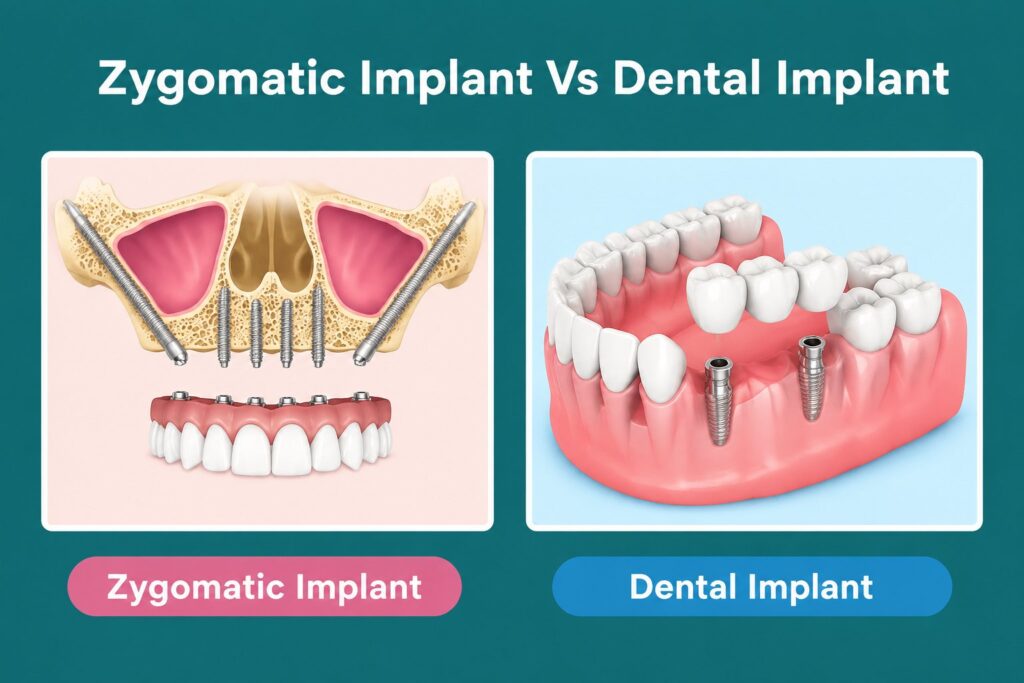
Choosing the right dental implant can feel confusing. Basal implants vs zygomatic implants is a common topic for those seeking advanced dental implants. Understanding the differences between these dental implant options is important. It helps you make the best choice for your smile, especially if you have bone loss or need full mouth rehabilitation. This guide explains both types, their benefits, and what to discuss with your dentist.
What Are Basal Implants?
Basal implants are a type of dental implant designed for people with less jawbone. Unlike traditional implants, they anchor into the strong, deep bone of the jaw. This bone is called the basal bone. Because of this, basal implants can work even when there is bone loss. They are often used in full mouth rehabilitation and are a good solution for those who cannot have regular implants.
What Are Zygomatic Implants?
Zygomatic implants are longer implants that anchor into the cheekbone, also called the zygomatic bone. They are used when the upper jaw has lost too much bone for regular implants. For example, if you have had bone loss due to gum disease or missing teeth, zygomatic implants may be an option. They are often used in advanced dental implant cases and full mouth rehabilitation.
Key Differences Between Basal and Zygomatic Implants
Both basal and zygomatic implants help when there is bone loss. However, they have some key differences. Understanding these can help you choose the right dental implant option.
Indications and Suitability
Not every patient needs the same type of implant. Therefore, your dentist will check your mouth and bone level before suggesting a solution. Here’s when each type is usually considered:
Procedure Overview
The steps for both implants are similar but have some differences. First, your dentist will take scans and plan the treatment. Next, the implants are placed in a minor surgery. With basal implants, teeth can often be placed within a few days. With zygomatic implants, the process may take a bit longer, but teeth are often placed soon after surgery.
Benefits and Risks
Both implant types offer many benefits, but there are also some risks. Knowing these helps you make an informed choice.
Benefits of Basal Implants
Benefits of Zygomatic Implants
Risks (for Both Types)
According to the American Academy of Implant Dentistry, dental implants have a high success rate, but risks are possible. Always follow your dentist’s advice for the best results.
Recovery and Aftercare
After implant surgery, you may feel some swelling or mild pain. However, most people return to normal activities within a few days. Good oral care is important for healing. Your dentist will give you instructions, such as:
With proper care, both basal and zygomatic implants can last many years.
Cost Considerations
The cost of advanced dental implants varies. Basal implants are often less expensive than zygomatic implants. However, both types may cost more than regular implants due to their complexity. In the USA and other countries, prices depend on:
Insurance may not always cover these procedures. Therefore, ask your dentist about payment plans or financing options.
Choosing the Right Implant: What to Discuss with Your Dentist
Every patient is unique. So, it is important to talk with a qualified dental specialist about your needs. Here are some questions to ask:
Your dentist will help you choose the best solution for your health and smile.
In summary, both basal and zygomatic implants offer hope for patients with bone loss. However, the right choice depends on your mouth, health, and goals. Consult Dr. Anshuman to determine the best implant option for your needs.